Monday, October 29, 2018

How do you know the path you're taking is the right one for you?

Not knowing what path to take or not knowing if the path you're taking is the one for you, can be extremely stressful. One important thing to keep in mind is to consider how you feel while taking this path to determine if it is the right one for you. You can find little things in your life (no matter how chaotic) that help you figure this out. For example, you should be more involved in your future and less involved in your past. If you find yourself more invested in your past maybe you should find something else that excites you about your future. You should also be confident in the choices you make in life. Even though there are many decisions that can be stressful and hard to make, whatever you decide you should be proud of and confident you made the best choice for you. The most important thing you should look for is that you are excited for what your future holds for you. Regardless of all the hardship and obstacles you have to face at this moment, the end result should make you happiest. 
Sources:

Thursday, October 25, 2018

How Can I Keep Myself Motivated and Inspired?


My life after high school will definitely be college. I am planning to follow my cousins footsteps into becoming a pharmacist in the future (he has one more year left before actually being a pharmacist). Woo! Anyway, it took him about 8 years to complete his education before reaching his dream, and I’m starting to question how he managed to not give up during the years and how he dealt with living away from his family. He is taking pharmacy school in Boston for 3 years, and he is finally on his last year! Will I be doing the same thing a year from now?


From a couple of sources, I’ve managed to seek these: 


1. Set a goal and visualize it down to the most minute detail.
2. Make a list of the reasons you want to accomplish the goal. 
3. Break the goal down into smaller pieces and set intermediary targets — and rewards.
4. Have a strategy, but be prepared to change course. 
5. Get the help you need.
6. Pre-determine how you will deal with flagging motivation.
7. Continually check in with your reasons for carrying on. 

I believe 1, 2, 5, and 7 will help me stay motivated and inspired to do 8 more years of school. Setting a goal and visualizing it would definitely cause me to work harder to reach my dreams of becoming a successful pharmacist. Imagining all the things I’ll be abke to do and provide once I get this job will increase my motivation. Making a list of reasons why I want to accomplish this goal and constantly checking in on them can be my daily reminder that I have to commit to this challenge, and that I am doing all of this for a purpose. A purpose that involves my family and my future family. Although, my main focus right now is to give back to my family what they have given me to reach my dreams. I know there will be times where I’ve got too much on my plate, which is why asking for help is a good reason to stay motivated as well. People willing to help me and my struggles will make me realize that I can do it not by myself but with those will support me all the way. Receiving support from anyone is such a big deal because they are the one’s that believe in us. 


One last thing on how to stay motivated for longer periods is to be positive. According to HuffPost, “An infectious, positive attitude can shift your entire life. Infusing your mind with positive thoughts will cause you to produce more positive results in your life. Right now you’re getting as many opportunities as you think you can have. To break into making what you’ve only dreamed of and wished for, you must start thinking, believing and speaking like you’re already worth that number! Purposefully infusing your life with a positive perspective will keep you motivated and eliminate all negative sources out of your life.”


Sources: 

https://www.forbes.com/sites/nextavenue/2013/07/19/how-to-stay-motivated-and-accomplish-anything/

https://m.huffpost.com/us/entry/us_4941277


http://www.planetofsuccess.com/blog/2010/how-to-stay-motivated-stay-focused-stay-positive/

Hailey Angulo One week research project

How can you prepare to move out of your parents home?

          As graduation comes closer and closer, so does the probability that most seniors will be moving out of their parents home and living in their own. We don’t know what this will be like or how to go about this new change. I personally want to move out as soon as I can. I want to finally have a sense of independece. I read an article on “Money Crashers” that focuses on financial tips of moving out. The article suggests creating a budget and starting to save money while you’re still living at home. I know for sure I will need to start saving now for appliances once I move out. When we don’t have to buy things, we don’t realize how expensive they are. Now that I have a job my mom is also holding me more accountable for paying for the things that I don’t need, but want. It is also smart to build a cushion of money just in case of an emergency.
          There is also a lot more than money to consider before moving out. For example, you need to know how to take care of yourself. You should know how to cook, clean, and be independent. The Unpaktblog had an article with 8 steps to prepare to move out. One of the steps was creating a chore schedule. Once you move out, you have to clean up after yourself. You need to be independent enough to take care of all the responsibilities you will now have.
        The last things to consider are the exact details of moving out. Where are you moving to? Will you have a roommate? Do you have a steady job there?  You need to consider all these questions before moving out. These will provide much needed stability to moving out. We all feel ready to leave out parents, but we need to actually be ready before making the big move. It will be a big change that can go south if you move out before you are prepared. I will follow these tips and others listed to insure I am as prepared as possible before moving out.

Sources:
https://www.moneycrashers.com/moving-out-parents-house/
https://www.unpakt.com/blog/8-steps-to-moving-out-for-the-first-time/

UC or CSU?

Choosing between a UC school (University of California) and CSU school (California State University) is difficult for some students, especially for students who have a high GPA and want to go to a competitive school. Some people say that it doesn't matter because you could still get a bachelor's degree from each school no matter what type of system it is. In reality, both schools have many contrast that could benefit any student depending on their background and interest. I searched differences between the two and here's what I found:
  • UCs have a better reputation than CSU schools because they contain some of the highest ranked schools in the nation, such as UCLA and UC Berkeley.
  • UC schools have higher requirements than CSU schools when applying. UCs expect a high GPA and SAT/ACT score while also being able to do activities outside of school. CSUs only expect a good GPA and SAT/ACT score, although their GPA recommendation is lower than UC's
  • UC schools are more expensive than CSU schools. The total tuition cost for a UC is about $13,900 while for CSU it's about $5,700.  
  • Both schools have different approaches to students. UC tend to develop students who have strengths on research, theory, and studies, while CSU schools are made for students interested in practical applications and non-research based careers.
  •  Students who attend UC schools are usually self motivated and have their own style of learning; usually assistants and postgraduate students teach students and professors are rarely seen. For CSU schools, students have access directly to a professor, having more learning benefits than UC schools. 
  • UC schools are more appropriate for the postgraduate student rather the undergraduate student. CSU schools offers good options for both postgraduate and undergraduate students.
In the end, the choice of schools depends on style of learning and financial situations. I really want to go to a UC, but because of financial reasons I might have to go to CSU. I could apply for scholarships and grants, but it's not 100% sure to get that type of financial aid. I still have time to decide, so hopefully I could go the school I want.

Sources
http://www.differencebetween.net/miscellaneous/difference-between-uc-and-csu/
http://admission.universityofcalifornia.edu/paying-for-uc/tuition-and-cost/index.html
https://www2.calstate.edu/attend/paying-for-college/tuition-by-year/Pages/basic-tuition-and-fees.aspx
https://www.imperial.edu/ivc/files/WHAT_IS_THE_DIFFERENCE_BETWEEN_THE_CALIFORNIA_STATE_UNIVERSITY_AND_THE_UNIVERSITY_OF_CALIFORNIA.pdf


What is my financial game plan if no one offers a scholarship?

            Further education after high school can be very discouraging for many reasons. Wether it is a private school, college, or university, there is no doubt that the tuition and everything that goes along with it will be expensive. The price for four-year institution have increased 213 percent since the 2017-2018 year. With competition also being a huge factor, scholarships are more competitive than ever. Although, it may be hard to even get scholarships, this should not be a set back for anyone planning on further education.
            Many people turn there back on the future without realizing how many opportunities there are for financial help. Scholarships may be hard, but The government give away a lot of money every year. It is very important for student to apply to grants and financial aid because it will help them pay off college fees. Attending a community college can also help you avoid those life-long student loans that need to be paid back. For many years there has been a huge misconception about community college. Community college is very affordable and allows student to pursue there education while not having to worry of paying a lot of money. The government is always giving out grants to students that are dedicated for their school, so it is important to stay on top on your classes if you decide to go to a community college or even a university.
            Another good way to raise money for college is getting a part time job, or putting a special talent to work. There is nothing wrong with a side hustle.  Showing off a talent in the street may help lay down a couple school books and fees. Also, having a job is a very good way to be making money while in college.
            Setting your mind to something may be hard, but with enough commitment it is possible to accomplish anything. Work hard for that free money and eventually it will pay off. 

Resources:
https://studentloanhero.com/featured/free-money-for-college-grants-scholarships
https://www.cnbc.com/2017/11/29/how-much-college-tuition-has-increased-from-1988-to-2018.html
https://money.cnn.com/2017/04/25/pf/college/pay-for-college/index.html


How can you finance a college education and leisurely travel on a fixed income?


 Traveling is a luxury that unfortunately we can’t all enjoy. Some of us need to work hard in order to achieve it. In order to be able to pay for college and also travel during my college time off  I would need to limit my spending and find ways to save my money. One way I can save my money so I can use it on vacation expenses instead is by going to a college closer to home so that I won’t have to pay to live in a dorm. Another way that I can save is by carpooling with my sister or friends if they happen to be heading that way, this will help me by saving money on gas because I can split the cost. When it comes to traveling, I can search for cheaper flights and book them with a lot of time in advance to get a better discount. A lot of times whilst traveling to popular tourist locations there tends to always a student discount that will help me save money that I can put towards something else whether that being for school or traveling. Buying or renting  school books online or purchasing used books from past students will save me  hundreds of dollars that will come in handy to purchase souvenirs during my travels. Applying for student grants is a really big help and goes  along way towards paying at least part of the tuition. This depends largely on what college you choose to go to.

 If traveling is just as important as going to college then you must do some research to figure out a way to manage and accomplish both things. You will not be able to do one or the other if you don’t make some financial adjustments in both your college and extracurricular activities. Both getting a higher education and traveling to new places are expensive endeavors. Being able to handle at least a part time job while going to school can be very beneficial towards your traveling budget and can open the door for traveling opportunities. Make wise choices when it comes to expenses and you just might be able to pull this off.


Research resource:

 https://www.usnews.com/education/best-colleges/paying-for-college/articles/2016-12-14/6-ways-to-save-on-travel-during-college-breaks

https://expertvagabond.com/travel-advice-for-students/

What is the best age to invest money into stocks after high school?

Tricia Roserie

Knowing me, I love making BREADDDD, so making money early is definitely a must. Experts say that investing right after college is the best thing to do, around the age of 22, $3600 should be invested into a growing stock. Throughout the years that amount should increase by $300, and soon enough the money will grow and grow. Investing into stocks should become a huge habit especially coming straight out of college. Most college students may have a large amount of student loans, however, over time that loan will decline and the investments will continue to grow in value.

The smartest thing to do when attending college is saving and investing because over time the money will continue to grow and life will become a little easier. However, money can be very difficult to save during college, because everyone is superrrr broke, and investing is even harder than saving. Most older people have a plan on how to save money, however for straight outta college kids that plan is clear non existent. The best adive that was given was save little at a time, doesn't matter the amount as long as it continues to grow gradually, and the moeny is being saved and not secretly spent.


https://thecollegeinvestor.com/17809/start-investing-after-college/
https://www.goodfinancialcents.com/investing-college-students/
http://time.com/money/collection-post/4161051/invest-for-college/

What is life like as Political Science Undergrad?


For the research project I decided to try to find some answers to a question that I have had for quite some time. What will my college experience and my future be if I major in political science as an undergraduate? Once I started to search the internet for my answer I realized that whatever information I take from this search will not be a for sure answer because we all experience different things or take different paths. With that in mind here is a general consensus on life as a political science undergrad. For starters academically it is mostly reading and writing which makes sense; on the other hand, the science part of political science is very important as well. Undergrads in this major have to be able to understand and explain complex political theories, statistics, and the psychology of politics in addition to reading and writing extensively about the topic. I also found out that many of the concepts of political science can be used in a broad scope of how our society works in general.While in college many political science undergrads get involved in organizations like student government, sororities/ fraternities, and political or social clubs on their campus to gain experience in that field. Life after college for political science undergrads is an open field for careers in many sectors. You could be a Lawyer, a journalist, or even a world traveler not simply a politician with that degree. The last thing I learned was that unfortunately no matter how knowledgeable in the field of political science people especially on social media or your family will still think they no more than you about politics. Overall this research has not only informed me more about my future major it has made me feel more secure and confident in my decision to study political science.
Sources
https://www.theodysseyonline.com/life-of-political-science-major
https://www.polisci.northwestern.edu/undergraduate/career-paths/
https://polisci.columbia.edu/content/considering-political-science-major

Is maturing into an adult a difficult transition?

Justen Walker

         When it comes to becoming a mature adult it requires hard-work and self-discipline. You will find yourself making grown-up decisions, for example, you either spend the forty dollars you have on gas or spending it on a night out with the boys. Sometimes, you're going to be exhausted and have to push through the long nights of work or the boring lectures in class. Growing up into an adult means some priorities have to come before social events and getting done what is going to pay off in the long run. Also, you're going to lose relationships and friendships that you and the person shared great times, similar interest, and deep moments with, but apart of growing up is learning to let go.

            Maturing into an adult can be hard but it also has it's good moments as well. No longer do you have your parents telling you what time to go to bed or to come home. It's up to yourself which can be a good and a bad thing. The good thing is you're the adult, you call the rules and you can do whatever you want because you're grown, but the bad thing is if you get out of hand then there will be nobody to tell you to get yourself on track. In the end, every teenager has to face adulthood, but it's whatever you make it, if you don't pay your bills on time then it will be hard, but if you're a hard-working person then it will pay off in the long run.

https://www.quora.com/Is-being-an-adult-really-that-bad
https://www.theodysseyonline.com/10-reasons-adult-hard


One week reaserch project

Are college professors more relax than high school teachers?

The primary responses I found showed me that there is definitely a large difference between the two forms of the same profession. Most high school teachers have much smaller classes and among a class are usually able to discern the regular faces that they see in each class meanwhile the college professors will have on average 200 students in the one class and have a much more difficult time. College professors will expect you to have a schedule and keep your own track of all your homework assignments and projects due. College professors will not remind you of homework or hunt you down if you have not turned anything in yet but they do hope for you to do well and it is important to go and meet these teachers yourself after class and do not be afraid to ask questions. In most classes it is very worth it to be outgoing and answer questions or add to class discussions. I found someones comment to be very interesting and what they said was that college professors have one primary thing not to worry about and that would be students who don't want to be there. In college not only are you paying to go your also volunteering to be there college professors do not care if you leave at any point which leaves the perfect situation for the real learning to begin.

https://medium.com/hillhacks/high-school-teachers-vs-college-professors-60be55a45031

https://www.quora.com/Why-are-college-professors-so-much-more-lax-than-high-school-teachers

Is it more beneficial to attend a four year or a Community College right after high school?

Is it more beneficial to attend a four year or a Community College right after high school?

I’ve heard plenty of controversy over whether it’s better to go straight to a four year or start off at a local community college. After researching this topic, here is what I’ve found:

Community College:
Community College is a route many people take after high school. It is a much more cost efficient way to achieve the credits you’d receive at a traditional four year, it gives a more flexible schedule to students who want to work, and it provides students with more time to choose an official career.  Overall it is an accessible way for students to gather experience and prepare themselves for a four year.

Four Year:
A four year is a great way to start your future. Although the curriculum is harder than community college, it is common route among high school graduates. It can be more useful to attend a four year immediately because the admission rate is higher to non transfer students, and transfer scholarships tend to be limited.

In conclusion, plans after high school are completely dependent on the student. Each student is different, and therefore destined to pursue different forms of education. Both forms of college are beneficial, and in the end it all comes down to what the student is prepared for.

References:
https://blog.collegevine.com/should-i-go-to-a-community-college/
https://www.collegexpress.com/interests/transfer/articles/how-transfer/pros-and-cons-transferring-community-college-four-year-school/

How do You Balance Your Money In College?

To balance your money in college, America's Debt Help encourages students to set up a weekly budget in order to limit the amount of money you could use. They also reccomend to see what is really necesscary. For example, it is not important to purchase a $5 cup of coffee every morning. They also bring up apps like Hooked and Pocket Points if you are going to buy food from restaurants and fast food. People tend to spend a lot of money through Postmates and UberEats which can become wasteful really quickly. Since college books are really expensive, it is reccommended to purchase used books online that can cut down the cost dramatically. It is also reccomended to live on the campus instead of purchasing a house or rent an apartment. If you do rent or purchase a house, make sure you're able to deal with the rent or get a roommate. A roommate can help you with your bills, maintenance, and etc. If you don't want to waste money at all on housing, its best to keep living with your parents.
Since college is not free, most of us will depend on student loans. Student loans isn't free money. Since it isn't it is best to stay focused on school so you won't have to repeat a class. Also to help reduce costs of traveling, you can use the school's public transports. For example, a Zipcar according to College Ave. With a car you are forced to pay for insurance, gas, and parking. Another way to save money is to check your school's amenities. Many schools have free movie nights and more depending on your location. With this you don't have to waste money on movie tickets for a fun night. Also College Ave reccommends you to cut cable out since there are websites such as Netflix and Hulu for $10 per month. They also reccommend to buy food from places like Costco and Sam's Club because it is in bulk and it is much cheaper than a regular grocery store. With this also purchase a coffee machine. There is no need to purchase expensive coffee every morning when you can make it for a cheaper price. Make sure you shop wisely though. There is no need to buy clothes online every week and put it in your shopping cart. Most important of all, start paying off your interest. If you are able to pay off your interest it will save you money in the long run.

Sources:
1. https://www.debt.org/students/college-budgeting-101/
2. https://www.collegeavestudentloans.com/blog/creative-ways-to-save-money-in-college/

One Week Research Project

How do I stop fear (of failure) from getting in the way of my future?
As technology advances and media grows, fear becomes a big part of our lives. Without realizing, fear is incorporated into our lives through articles such as “A New Disease Is Spreading, Go Buy Your Medicine Now!” or “Does This Ever Happen To You?” As we grow up and move on to college and more, it’s time to stop letting fear be a factor on what we think we can or can’t do.

In order to move past it, being able to identify fear is the first step. If you only see the downside of things, react quickly without thinking, avoid new things, stay inside of your comfort zone, struggle following your gut instincts, or can’t handle making decisions, it’s possible that fear is what’s motivating you (and not in a good way).

In college and in life, being able to set aside fear as our ruling voice can help us make better decisions for ourselves and what we really want. After identifying your fear(s), write it down. Writing it out can help you have power over that fear by bringing it to light. Rip it up, crumple it, step on it. Tell yourself that this fear is not going to limit you anymore. In order to get over fears, keep on stepping out of your comfort zone. Don’t think about the aftermath or what could go wrong. Base your decisions off of how you want to succeed in life, not fear.
Related image
However, remember that having fears is completely normal. We all have the same simple fears, but only some of us let them rule us. What’s important is that you don’t let them limit what you want to do. Let fear guide you, but not control you.

Grace Goodwin


Is community college a viable alternative to a university?

As the High School years go on, going to a university right away seems like a challenge both financially and educationally.  As any alternative to a certain situation, there are both negatives and positives. One of the main selling points is that it is much cheaper than going straight into a four year. According to my research, a community college costs about 1/3 the price of a university while getting a general education that is almost just as beneficial. There are also easier, classes, which will allow students time to become accommodated with their new surroundings and the harder rigor of courses rather than being flung straight into a competitive program that is not what they are used to. In addition to allowing a less challenging experience, a junior college puts less pressure on picking a major right away, allowing students to really make the right decisions. What I would say is the biggest reason that community colleges are a great alternative is that they allow a student who did not do so well in high school to have a sort of clean slate and start anew. If a student performs well, the community college route may allow them to get into a much better school later on than if they had plunged into the university route right away.
Usually, a university offers a chance to meet new people and make connections with individuals that you never would have met otherwise. This is something that is usually not present at a community college setting, and it is a crucial benefit that just might be necessary for you. By growing closer to other students, you may receive help on courses that you are struggling with, and have people to help support you in times of stress and disarray. The lack of involved students at a community college may also affect the classroom experience, as professors may not be able to teach as well if there is nobody participating and benefiting the discussion. Despite all these negatives, the community college route is nothing to just dismiss, and can be the answer that many graduates are looking for. Transferring to a university after a community college is the best way for a student to either start over, increase their chances of getting into a certain university, or allow them to save money that they would otherwise have to go into debt to obtain.

https://www.scholarships.com/resources/college-prep/choosing-the-right-school/the-pros-and-cons-of-community-colleges/
https://www.communitycollegereview.com/blog/successful-transfer-students-show-community-college-as-viable-option
https://thecollegeinvestor.com/18206/community-colleges-viable-alternative/

What is Medical School like?

One Week Research Project

What is Medical School like?
        Looking much farther down the road into the future, I have always wondered what I'd do after graduating from college with a Bachelor's Degree. Some will stop there and will look for careers that best suit them, however, I don't think I'd stop there. 
         After graduating college with a Bachelor's Degree at the age of 22, I am determined to continue my education in medical school. There are over 130 U.S. Medical Schools that award M.D. to graduates. Notably, there are two distinct branches of medical school that individuals pursue: Allopathic Medical School and Osteopathic Medical School. The difference between these two is that Allopathic Medical Schools award M.D. degrees to graduates, while Osteopathic Medical Schools award D.O. degrees to graduates. Also, individuals who take the path of Osteopathic Medical School learn osteopathic manipulative treatment, in which they use their hands to help diagnose and treat different diseases. 
         While attending Medical School for an additional four years, each year is different from the next. In the first year of medical school, it mostly consists of arduous, yet basic classes. The first year of med school is always the hardest year. In addition, the first year is a mixture of lectures and labs. The second year of med school is almost the same as the first, quite frankly. However, the only difference is that it will be more clinical based because you will encounter many diseases known to the human body in the hospital. After the second year, all the information acquired previously will now be put into use into the next two years, 3 and 4. You will have clinical rotations in hospitals and clinics. In these rotations, you will be a part of a team that includes: a senior doctor, residents, and interns. From there, you will be graded on your performance during the rotation by the team. 
            Although Med School is very rigorous, mentally and physically demanding, and time-dragging, it's worth all of the effort you put in. Essentially, you become a different person, and you grow as an adult and as a professional .

Wednesday, October 24, 2018

How do you balance a full time job while also being a full time student?
I was wondering how people are able to afford a place to live, cars, all the bills they need to pay, because everything is soooo expensive currently. Knowing this I know that I must go to school so I can have a career, but need to be able to pay for school and daily necessities which this is where the full time job would come in. After my research most were saying it’s very hard but possible. In order to succeed in both the school aspect and working you need to set expectations in everything you do. Make time to treat school like your first job and work as your second job. Have goals, such as not procrastinating as much, saving as much money as possible, keeping your grades up and also if you see your grades are slowly going down shape up as soon as possible, ask for less hours, this normally will only work though if you have a flexible job. Yes, it does sound great to be able to have a full time job but if it is clashing with school maybe part time is the way to go. If so just live on a budget make sure your expenses are going to necessary items. I also learned how this can help you after graduating college, you’ll have more professional freedom because with little debt you are not pressured into taking high paying jobs right after school, you are able to maintain a professional mindset while also having real world skills that normally aren’t learned until after college. Stay focused and find a balance that works for you.
References:
http://college.monster.com/training/articles/1139-how-to-balance-school-and-a-full-time-job
https://www.rasmussen.edu/student-life/blogs/college-life/working-full-time-and-going-to-college/
https://www.learnhowtobecome.org/career-resource-center/working-full-time-and-going-to-school-online/


Should I follow my dreams?

Should I follow my dreams?

Not everyone has the opportunity to do what they enjoy after High School but I have been given the chance to continue playing soccer. Not only have I been given the chance to continue playing but I have been accepted to play in one of the top schools in England. This may not mean a lot to my classmates but this is a big deal for my family and I because I have to move to a new country and live by myself at a young age. I have worked hard in order for me be given this chance but I must be realistic with myself. Do I go follow my dreams and continue down this road or should I stop playing and focus on my career. I still have a couple of months to decide but please let me know your honest opinion.

What Majors Are The Most Common?

What Majors Are The Most Common? - Juliana Carrera

There is a numerous amount of majors. Colleges from around the world have similar and different majors. Some contain that specific subject you want to learn and dedicate your life to, others, not so much. Choosing a major can be a difficult decision, as your future will revolve around it. Some people immediately know what they want to succeed in, others remain undecided and just go with the flow. There are majors that are more chosen than others, here are a list of top 10 popular college majors from a career website.

1. Biology
2. Business Administration
3. Communications
4. Computer Science
5. Criminal Justice
6. Elementary Education
7. Marketing
8. Nursing
9. Psychology
10. Political Science

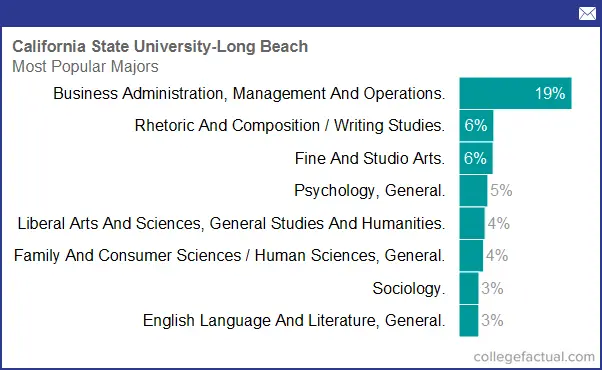
This is just an example of a list with popular majors overall. Universities and colleges create their own graphs and lists that display the percentages of students who participate in the majors that are frequently studied at that school. An example would be from Cal State Long Beach.

Image result for cal state long beach majors

Resources
http://www.onlinecourses.net/commonly-picked-majors.html
https://www.collegefactual.com/colleges/california-state-university-long-beach/academic-life/academic-majors/

What Can I Do With a Biology Degree?


ONE WEEK RESEARCH PROJECT

Question: What Can I Do With a Biology Degree?

   For the most part of high school, the thought of college seemed to be a distant goal. However, now as seniors, college is the top priority and the need to get in is skyrocketing. Most people are unaware of the change that will be happening in each and everyone's life when the new school year rolls around when the life of college begins and the door that was once opened in high school is rather closed. Seniors must now think of what field to major in college, and the requirements to get in.
    One of the highly impacted majors in Biology and for the most part, people are unsure of why that is. To continue, with a biology major, exactly what jobs are available to one's disposal after completion with the degree?
    Well, for starters, Biology is a major offered at numerous colleges that study the principles governing all forms of life. It is a major that would most likely attract those interested in animal studies and the studies of the human body. Although a Biology degree may not seem like such a huge degree, there are many jobs and opportunities that one could grasp with a Biology degree.
Some of the top jobs that one can get with a biology degree are as follows:
1. Physician:  $208,000
2. Dentist :     $158,120
3. Podiatrist:   $127,740
4. Pharmacist:  $124,170
5. Optometrist: $ 110,300
Physician Assistant $104,860
The overall top jobs that one can get with a Biology degree based on annual income are:
1. Biochemist: $177,840
2. Medical Manager: 176,130
3. Financial Analyst: $165,180
4. Pharmaceutical Sales Representative: $157,490
5. Physician Assistant: $146,260
A Biology degree is not a degree limited to a small number of jobs. A degree in biology can open up a wide range of job opportunities that won't leave someone unable to find a job. If one job field does not end up working out, it is easier to switch to a different job as opposed to an alternate degree that is limited.

References:
1. https://biology.williams.edu/the-major/
2. https://www.trade-schools.net/articles/biology-careers.asp
3. https://www.geteducated.com/careers/jobs-for-biology-majors
4.https://www.thebalancecareers.com/top-jobs-for-biology-majors-2059884


How to ensure that credits from community college are transferable

My Question: How can I ensure that credits from community college will be transferable?


After high school I plan on going to community college to receive my Associate degree, but I'm worried that some of my general education credits won’t transfer with me to a university. From my research I found out that it is extremely important to check the transferability of the course before enrolling. Most websites stated that a majority of credits will transition with the student, but here are the statistics:


● 39% of students transferred no credits (an average loss of 27 credits)
● 33% of students transferred all eligible credits (retaining an average of 24 credits)
● 90% percent of all student credit transfers were between institutions that were accredited regionally, instead of nationally
● 56% of transfers originated from public 2-year institutions
● 35% of first-time undergraduate students transferred at least once
● 21% of students transferred once
● 11% of students transferred more than once


What I learned from my research is when picking courses it is crucial for transfer student to establish with a school counselor that credits will carry with them when they have reached their exit point. Also if planning to move out of state students should check that credits are from “college level” classes and fit within the schools curriculum.


Is Engineering Really That Difficult?

Is Engineering Really That Difficult?

Engineering is one of the hardest undergraduate majors available. However, there will be plenty of people who say that they want to become engineers but the sad reality is that over 60% of freshmen drop out or switch majors. Why is this? It's simple, a lot of people are not ready for vigorous work and difficult concepts. The level of commitment needed for this major is almost unparalleled. Students will have to put in hours of extra work to fully grasp difficult topics. Math and physics are the fundamentals of engineering. Students who are not strong in math and physics will not make it far in this major and will struggle to cope with the work. Those who are interested in engineering must be ready to put in a lot of effort and make sacrifices to graduate. Engineering is difficult because of the advanced nature of the courses required as well as the effort required to make it through. So, anyone thinking about becoming an engineer must contemplate whether they are cut out for this level of stress and work

Basic math classes for Engineering: Calculus II 
                                                          Calculus III
                                                          Linear Algebra
                                                          Differential Equations (Engineering Math)

These are just basic math courses most engineers take but there are a lot more math courses depending on which specific engineering is selected. 
                                                     
https://classroom.synonym.com
https://www.phyzzle.com

Lopez- when do you know you’re ready to move out of your parents house?

From my research I was able to see that after graduating high school, most young adults do believe that they are ready to move out and put themselves in the real world. However, most of the time that is not the case. There is a really big difference between feeling as of you are ready to move out, and actually being prepared to move out. In order to prepare yourself to move out of your parents house you must take many things in to consideration. Things such as your income, and whether or not you will be a full time student.
         Some other factors that must be taken in to consideration are rent for your apartment, the security deposit, being able to keep up with monthly payments, and utilities. These things may be difficult to afford if you do not have a stable job. In some cases it is easier to spit expenses with a roommate. Finding a good roommate can be difficult, but you must assure yourself that they are at the same level of maturity as you and that they will be able to keep up with monthly payments.
         Perhaps the best option is (if your parents aren’t kicking you out) to try to stay at your house for as long as possible. Moving out is a huge responsibility that most of us are not prepared for upon graduating high school. Once you begin to work and you think that you make enough money to support yourself, then it is safe to move out. You should not try to rush yourself into something that you are not prepared for.
References

Is the transition from high school to college as hard as it may seem?

Is the transition from high school to college actually as hard as it seems?
Here’s what I found :)


Yes it is hard because …
~ you are changing your lifestyle and your surroundings
~ you are learning to become more independent and self-reliant all while balancing your
  schoolwork and maybe a job
~ its harder to make friends and find ‘your group’ of people on a huge campus


No it is not hard because …
~ the type of work your doing is pretty similar to high school
~ the demands are close to the same as well, and you figure out your own way to study/take
  notes rather than being forced to do it a certain way
~ most college professors are like high school teachers, and allow you to do your work within
   a reasonable amount of time, at home


What I learned from looking at different articles was that it seems pretty clear that the hardest part about the transition from high school to college is the atmosphere changing. Many people addressed their personal struggles they had with adjusting to the independence and self-reliance that they had not had in high school, and how they overcame it. Those same people also commented and said that on the academic side, it was close to the same as high school. With a few exceptions, most of them did not struggle because many of their professors taught the same way as their high school teachers. This is not to say that college level work will be ‘easy’, but to expect about the same workload (maybe a little more) when attending college next fall. :)


Sources :


https://www.healthychildren.org/English/ages-stages/young-adult/Pages/The-Transition-from-High-School-to-College.aspx

How do I Travel While In College?

How do I travel while in college?

My post high school plans include college and traveling the world, but I don't want to put my education on hold while pursuing something I've dreamed of doing. Being able to travel while still in college and not putting either on hold is something I've been wanting to do but wasn't sure how easy it would be. Here are some tips and pro's that I found that might help:

-Save money to travel: make this one of your priorities and start to earn, save, and don't spend!
-Study abroad: being able to experience a new culture for a longer period of time
-Short term mission trips: going with a group with similar beliefs and being able to help out
-Volunteer abroad: there are many opportunities to go volunteer around the world
-Find a job/internship abroad: working in different places and gaining experience
-Club trips: joining clubs and campus groups that do some traveling
-Self organized trips: traveling by yourself or with a friend can make for a fun and exciting adventure.


Resources:
http://earthchilderin.com/blog/the-ultimate-guide-to-traveling-while-in-college
https://wanderwisdom.com/misc/CollegeTravels


Tuesday, October 23, 2018

What is life like living on your own ?

What is life like living on your own ?

  1. "You need a companion for your life to feel whole and normal (plus time with friends and family here and there)
  2. You enjoy your own company, thank you very much (plus time with friends and family here and there)
Most people, at least from my non-scientific anecdotal experience, fall into category #1. Humans are social animals, after all. Me, I am, after much trial, error, and self-reflection, in the second category. So is my mom, so I guess I get it honest.
I prefer life on my own. Not that I don’t enjoy the company of other people and not that I haven’t given a good go at relationships but, in the end, it turns out I’m best left to my own devices. When you start to have feelings of resentment towards your partner for how much of ‘your time’ they take up, that’s not a healthy thing and you need to admit that they’re better off without you. And vice versa. It sounds terrible, but there it is."

Reference
1. https://www.quora.com/What-is-it-like-living-on-your-own

[Mycah Reece] : What are the branches of forensic science and what courses are needed for them?

One-week research Project

Question:  What are the branches of forensic science and what courses are needed for them?

           Forensic Science is the study of science and technology. It is utilized to resolve criminal, civic, and regulatory matters. At the least a bachelor's science degree is needed to be eligible for most jobs. Courses required to earn the degree vary within the different specialties of forensics. Here are four branches in forensics:
          - A forensic physician requires a medical degree in pathology, which will have undergraduates study biology, inorganic or organic chemistry, mathematics, and physics for their degree. These classes are necessary for discovering how and why a person died when their organs, fluids, and tissues are studied.
          - Crime scene investigators look for evidence that could solve what happened at the site of the crime scene. Such evidence could be fingerprints, weapons, blood, and any other fluids. Chemistry, a major requirement for this branch, would be taken alongside certification courses in biological evidence, crime scene photography, and criminal law procedures. Many CSIs are police officers with training in law enforcement.
          - Evidence taken by CSIs are brought to a laboratory where crime laboratory analysts use testing to further solve the crime. Any findings are brought before criminal courts and law-enforcement agencies. However, before future analysts are able to have this career, courses such as genetics, biochemistry, physics, toxicology, and laboratory terminology must be completed.
          - Forensic psychologists assess the mental states of people involved in the current case by testing a witnesses credibility and competency. Undergraduate courses include psychology, adult human development, child and adolescent development, and criminology. Unlike the other three branches, a master's degree is desired by agencies who need workers in this field. Some of the graduate courses are crisis intervention and ethics, criminal behavior and methods research, and substance abuse treatment.


References: 
  1. https://work.chron.com/courses-required-forensic-science-12059.html
  2. https://work.chron.com/jobs-fall-under-forensics-scientists-15103.html 
  3. https://work.chron.com/qualifications-needed-forensic-psychologist-6892.html

Sunday, October 21, 2018

[Maximilian Kallas]: How Can You Get Free Money For College?

One-Week Research Project

Question: How can you get free money for college?

There are two forms of “gift aid” that colleges offer to their students: grants and scholarships. These types of financial aid don’t have to be repaid, unlike student loans. The difference between these two forms of gift aid is that grants tend to be need-based while scholarships are often merit-based.[1] Institutions that offer grants scholarships include the federal government, state governments, colleges, and private or nonprofit organizations.[1] The most common grant awarded in the US is the Pell Grant which aids financially challenged students according to their the severity of their situation.[2] California residents are eligible for the Cal Grant, which students are automatically signed up for if they have applied for the Free Application for Federal Student Aid (FAFSA).[3] There are also grants for special categories such as students who hold a certain church membership or who have a parent that has served in the military.[2]
Scholarships are usually awarded based on academic, athletic or artistic talent. There are thousands of scholarships offered by a variety of organizations which students can apply to online.[1] Moreover, 4-year universities usually have an honors program which helps top students find scholarships more easily. Most grants for financially challenged students have a merit-based component as well; for example, the total amount of money that a student receives for the Cal Grant depends on the student’s financial situation in addition to their education background.[3] As a result, even if the financial situation of two students are the same, the student that has higher grades and test scores will most likely receive more financial aid. While grants and scholarships are more time-consuming to apply for and more difficult to receive, it is important that students apply to as much gift aid as possible before they consider taking out student loans.
$$$$$$$$$$$$$$$$$$$$$$$$$$$$$$$$$$$$$$$$$$$$$$$$$$$$$$$$$$$$$$$$$$$$$$$$$$
$$$$$$$$$$$$$$$$$$$$$$$$$$$$$$$$$$$$$$$$$$$$$$$$$$$$$$$$$$$$$$$$$$$$$$$$$$$$$$$

$$$$$$$$$$$$$$$$$$$$$$$$$$$$$$$$$$$$$$$$$$$$$$$$$$$$$$$$$$$$$$$$$$$$$$$$$$$$$$$
$$$$$$$$$$$$$$$$$$$$$$$$$$$$$$$$$$$$$$$$$$$$$$$$$$$$$$$$$$$$$$$$$$$$$$$$$$$$$$$
$$$$$$$$$$$$$$$$$$$$$$$$$$$$$$$$$$$$$$$$$$$$$$$$$$$$$$$$$$$$$$$$$$$$$$$$$$$$$$$
$$$$$$$$$$$$$$$$$$$$$$$$$$$$$$$$$$$$$$$$$$$$$$$$$$$$$$$$$$$$$$$$$$$$$$$$$$$$$$$
$$$$$$$$$$$$$$$$$$$$$$$$$$$$$$$$$$$$$$$$$$$$$$$$$$$$$$$$$$$$$$$$$$$$$$$$$$$$$$$

Thursday, October 18, 2018

[KC]: One-Week Research Project (FAQs)

Hi young adults! Here are the instructions for the blog assignment as well as some suggested questions in case you need a bit of direction.

The task: question + research + blog post + two comments.
Here are some ideas!

FAQ : Frequently asked questions ABOUT COLLEGE
What kind of college do you want to attend? What are the costs of attending, including tuition, housing, books, and materials?  Who is accepted? What is the graduation rate? What kind of financial, social, and academic support is offered there? What is life around the college like?  When are the application deadlines? Is there an Honors Program? What are the admission requirements? What majors are offered? What can you do with the major?  What kind of knowledge is associated with your major? What sort of things do majors read and study? Does this campus serve Coke or Pepsi?

FAQ : Frequently asked questions ABOUT WORK
What kind of activity does this job require?  What are the common tasks? What are the working conditions?  What skills or abilities do I need to have? What do I need to know in order to do this job?  What kind of preparation do I need for this line of work? How do people get hired? What can I expect to get paid for this work?  What are the chances for advancement? What is the outlook for this kind of work in the future? What programs help prepare for this kind of work?  Are there any resources that can help me learn more about this line of work? Are there internships available?


POOF! You are empowered to write your own question if you don’t like any of ours.  What do you want to know? (“How much is rent for a studio apartment in Long Beach?”) Go find an answer about life after high school.